20 Excellent Facts For Choosing Termite Extermination Services In Jakarta
Moisture And Mud TubesThe Battle Of JakartaJakarta exterminators scrape mud tubes out of foundation walls every single day and refer to it as termite control. It is not. It's just cleaning up. The mud tube does not constitute an enemy, but more of an evidence. Termites don't build these channels of earth because they're interested in building. They build them to store water inside their bodies, and then wrap them in cuticles so thin that they're able to dry out in only minutes if the humidity drops below 70 70%. Each mud tube on the Jakartan wall is an admission. This tube shows exactly where moisture is escaping a structure. The colony could re-establish next to you if you apply termite-control treatments that poison the tube but do not address the moisture issue.
1. Mud Tubes Are Hygrometers, Not Highways
Termites add soil to the regions of the greatest loss of vapor. The tube that's ascending the exterior wall of an bathroom is indicating that the vapor is escaping through this particular mortar joint. A tube that extends from the slab's edge suggests that the soil is saturated. If exterminators use tubes to read water tables instead of invasion paths, they become consultants for building performance rather than pest control agents. This is higher-value work. The work is more valuable.
2. The threshold for invisibility is 12 percent.
Wood that is less than 12 percent moisture is not visible to termites. Above fifteen percent, it emits detectable volatile compounds. Most Jakartan houses contain wood that was able to pass this threshold long back, but was not dried. Anti-termite firms that don't employ moisture meters or pin-types to test every door frame or window sill as well embedded beams are guessing. The clients will be charged for certainty.
3. The 300 to 500mm Moisture Belt
The soil directly in front of the foundation walls is shielded by roof eaves, and is considerably drier than the open garden soil. The termite activity of foraging is concentrated in the region 300 to 500 millimeters from the structure, close enough to reach the foundation, but far enough to be able to absorb rain. Bait stations that are in a flush with the wall are placed in hydrologic deserts. Professional installation involves the measurement of this gradient, and then positioning stations in which termites are likely to forage.
4. Potting Mix is Bait Station Technology.
The high-organic-load mix potting mix, when soaked in water and backfilled around bait stations, creates an artificial moisture shadow that extends attractancy beyond the actual station. Jakarta's compacted, urban clay lacks both the porosity required by termites and the organic material they need. Exterminators who put stations in the soil that is not amended are constructing furniture and not traps. The hole should be oversized. Imported soil is required. The humidity must be artificially raised.
5. Above-Ground Stations Benefit from Tube Behavior
Above-ground stations latch directly onto active mud tubes, causing termites to travel through toxicant-impregnated mud during their daily commute between nest and feeding site. This isn't baiting. It's toll collection. The tube stays in tact while termites continue their journey, and each forager who passes by brings poison to the colony. Pesticides who take out tubes and stations prior to placing them in their place will remove their own delivery infrastructure.
6. Water Is an Attractant It isn't an Effective Repellent
US Patent 6023879 was granted in 2000. It describes the transfer of water into the soil around bait stations, which creates more moisture than nearby areas. This actively attracts termites to poisonous insects. Twenty-five years later, Jakarta exterminators still hold that moisture repels the termites. However, it doesn't. Chemical resistance is not a match for strategic irrigation. Pesticides that don't irrigate the bait arrays wait for termites to show up by accident rather than directing their appearance.
7. Lawns are termite deserts
Turfgrass is fertilized by pesticides and herbicides. This can reduce termite hunting activity. Landscape planting beds that are mulched, irrigated or organically rich will keep termite activity constant. Monitoring stations are wasting time on sterile grass and low-risk areas when anti-termite services are distributed evenly. Station grids must be focused on the zones where termites are most likely to live.
8. Self-Recruitment increases effectiveness
The transfer of live termites into an empty bait tank soaked in water from a station infested with termites results in a self-recruitment pattern. The termites introduced that are already accustomed to the surroundings of the station are immediately fed. This single step increases the consumption of toxicants by around 30 percent. Jakarta exterminators, who eliminate termites from monitoring stations, are wasting efficacy.
9. Concrete Coring Is Non-Negotiable
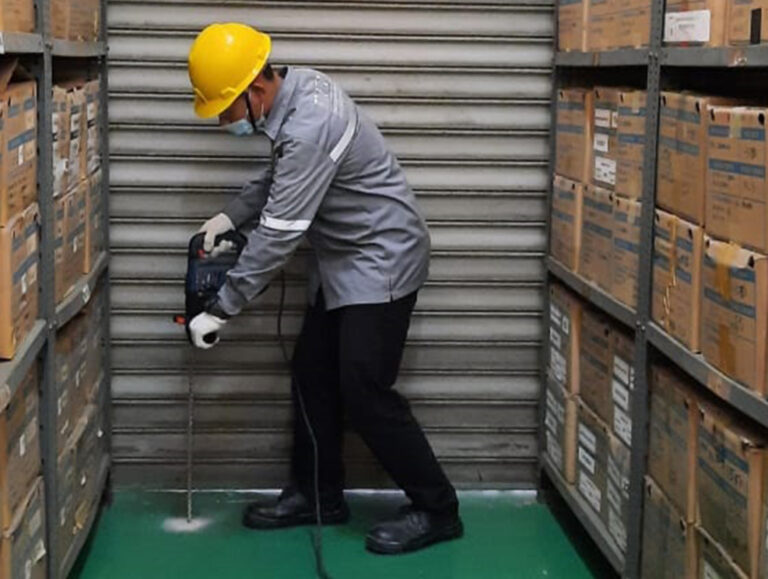
Sealed hardscape--driveways, patios, sidewalks--prevents rainfall infiltration and creates artificial dry zones beneath the building perimeter. Professional procedures include core drilling into the concrete to create bait stations in the soil. After installation, stainless steel caps are fitted flush with grade. By avoiding coring due to homeowner resistance, anti-termite service providers accept that as much as 50% of the perimeter is left untreated. Note the limit. Document this limitation.
10. Scraping Tubes is Cosmetic Maintenance
The pest control industry offers homeowners the idea that visible dirt tubes are the cause and that their removal is treatment. This isn't the case. It is the same as emptying a mousetrap but not sealing the hole on the baseboard. Exterminators are employed by homeowners to remove colonies, not to wash the walls. Jakarta anti-termite solutions that distinguish between cosmetic maintenance and colony elimination will dominate the top segment of this market.
Conclusion
Jakarta's battle against moisture mud tubes and termites is not just one of termites. It is a battle against physical science. Termites are simply the instrument that Jakarta's structural flaws, drainage failures, and soil chemistry imbalances express themselves. Anti-termite services that position themselves as building performance consultants--arriving with moisture meters, core drills, irrigation tubing, and soil amendments--will win heritage contracts, high-value residential clients, and commercial property portfolios. Services that continue to scrape tubes and selling poison as if it were the year 1995 will only compete with respect to cost. The gradient of moisture can be determined. The irrigation method is 25 years old and is patent-protected. The choice for Jakarta exterminators isn't the question of whether or not to use these methods. It's not a matter of whether they should adopt them earlier or later than their competitors. Check out the best jasa basmi rayap for more advice including kayu anti rayap, jasa anti rayap tangerang, pembasmi hama, pembasmi rayap kayu, jasa pest control, rayap adalah, jasa rayap, anti rayap terbaik, jasa pembasmi rayap, jasa rayap and more.

Jakarta Indonesia's Tropical Climate Is A Constant Threat To Termites
In Jakarta, franchises of pest control firms from the temperate zones export their training manuals, equipment as well as chemical formulas. They realize after 18 months that they have nothing operating as claimed. The products themselves aren't ineffective. Urban climates in tropical regions invalidate the assumptions made in these products. The pests of Jakarta don't cease feeding during winter months because there is no winter. Due to Jakarta's warm, humid soils all year, termiticides that are used in soils exhibit an unprecedented rate of hydrolysis before in Ohio or Osaka. Menteng's high levels of humidity affect the flavor of baits, so Melbourne designs aren't applicable. Anti-termite services that treat Jakarta as a tropical version of a temperate market will result in suboptimal results. Jakarta isn't an exact copy of any other location. It is a distinct operational environment.
1. Zero Foraging Downtime, 365 Days
The termites of temperate species stop hunting if soil temperatures drop below fifteen Celsius. Coptotermes gestroi, Microtermes insperatus and Jakarta's day-to-day and annual temperature fluctuations are all part of the realm of active foraging Coptotermes. There isn't a window to treat. There is no month which is suitable for renovations. The procedure for eliminating colony must include a continuous feeding pressure of three hundred sixty five days every year.
2. Humidity Exceeds Cuticle Limit
Termite cuticles desiccate below seventy percent relative humidity. The humidity in Jakarta's dry season ranges from seventy-five to eighty percent. The humidity in the wet season is higher than 90%. Termites aren't content with these conditions. They are required to constantly hunt, since their water balance is constantly shifting. The constant threat isn't a flimsy ploy but a physiological requirement.
3. Chemical Half-Life Contracts based on Months
The rate of hydrolysis increases with temperature and moisture. In Jakarta, a soil termiticide with a six-month efficacy is only effective for three or four months. The anti-termite service that offers a twelve-month warranty on liquid barrier treatments is either over-concentrating applications, misrepresenting remaining life, or taking predictable reapplications into account as a cost for business.
4. Silty clay can be used to build colonies.
The most prevalent type of Jakarta's urban soil, compacted sandy and clay, is able to keep moisture in levels that make it ideal for the attraction of insects living in subterranean soils. When soil water content exceeds twenty-two percent, termites don't just tolerate the surroundings; they prefer to take over the area. Pesticides who apply chemicals without first determining soil moisture levels treat the symptoms, but leave habitat conditions unaltered.
5. Preferred Wood Species are Construction Standard
Coptotermes curvevignathus is a fan of pine, red light meranti and mangium. They also make up the most sought-after framing and joining timbers on Jakarta's housing market for middle class families. Teak and Merbau are less appealing to termites, however they can cost three times the price. The Jakarta construction market has selected the termite-friendly timber.
6. Fungus-Growers Dominate, Coptotermes Destroys
Jakarta's termite assemblage is numerically dominated by Microtermes insperatus and Macrotermes gilvus--Termitidae-family fungus-growers that require soil contact and organic debris. Coptotermes Gilvus is not as frequent however it can result in disproportionate structural damage. Through focusing their marketing only on Coptotermes they are misrepresenting Jakarta's species composition.
7. Green Spaces function as Colonies Reservoirs
Jakarta's unmaintained railway lines as well as urban forest patches are home to colony-parents who extend foraging tunnels out of nearby residential areas. Nine Hazard Class One Sub-districts have one thing they share they have a substantial amount of vegetative cover. The only way to secure homes in these areas is to use property-line treatments. Colony suppression on a neighborhood scale involves coordinated baiting of multiple properties.
8. Construction Activity Manufactures Home
Urban development in Jakarta doesn't remove termite habitat, but it provides a unique habitats. Imported soil, irrigation, and buried construction materials provide the ideal conditions for colony development. The newly built housing estates located in BSD or Bekasi are not completely free of termites. It's a habitat for termites that was opened to the public on the day the first tree was planted.
9. Imported timber bypasses quarantine
Tanjung Priok is the port of entry for invasive termites species. that arrive in Jakarta via containers for trade. It is also a donor city that exports infested pallets as well as manufactured wood products to temperate ports. This bidirectional flow permits constant genetic exchange, which prevents isolation of colonies. The termite outbreak that occurs every month in Jakarta is reinforced with the arrival of container ships.
10. Climate Migration Increases Populations
As temperatures increase habitats that were previously marginal in the Javanese Highlands are now suitable for lowland species of termites. When temperatures are warmer, parent colonies establish at higher elevations survive cool winters. Jakarta isn't only being harmed by local colonies. Jakarta isn't just being targeted by local colonies, but also by a growing population moving out of cooler refugia.
Conclusion
The expression "tropical climate and constant termite risk" is not a commercial slogan. It is an operational specification. Jakarta antitermite service providers should adjust chemical rates to speed up degradation, set up bait stations all year round test soil moisture prior to every treatment, and differentiate the structurally destructive Coptotermes with dominant fungus species. The market doesn't reward companies that complain about challenging conditions. The market rewards companies that modify protocols according to the circumstances and document outcomes. Jakarta's climate is not an excuse for failure in treatment. This is the factor that distinguishes specialist exterminators from generalists who use protocols sourced from other countries. Homeowners are able to distinguish between the two categories. The distinction can be seen in the desire of homeowners to pay premiums for those who are not, as well as their unwillingness or inability to sign contracts with the ones who aren't. See the top anti rayap for site recommendations including cara basmi rayap, jasa pembasmi hama, cara membasmi rayap di lemari kayu, bahan lemari anti rayap, jasa rayap, kayu tahan rayap, jasa anti rayap surabaya, cara membasmi rayap kayu, cara membasmi rayap di lemari kayu, cara membasmi rayap kayu and more.